Most Enrichment Programs for Mattawan Preschoolers Were Designed for School-Age Kids — and It Shows
Why the Delivery Model Matters as Much as the Dance Instruction Itself
The most common mistake families make when choosing movement enrichment for a three- or four-year-old is selecting a program designed around older children's schedules, stamina, and cognitive readiness — then wondering why their child won't re-enroll. Evening studio classes require a preschooler to perform at their most tired point of the day. Unfamiliar spaces trigger adjustment periods that eat into actual instruction time. And group classes that mix ages create environments where the youngest children spend more time watching than moving. Little Movers Dance Classes was built to avoid all three of those failure points by delivering instruction on-site inside Mattawan preschools during the school day.
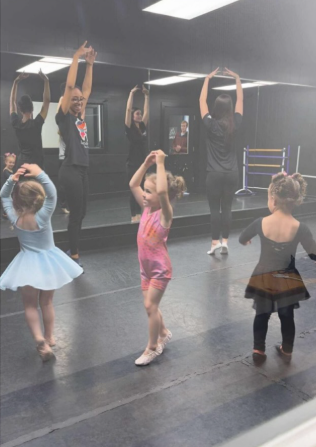
Classes combine ballet, jazz, and hip hop into one session structured specifically for preschool-aged children — not a scaled-down version of a curriculum designed for seven-year-olds. Instruction happens in a space children already know, with peers they've already formed relationships with, at a time of day when their attention and energy are best suited for learning new physical skills. Families in the Mattawan area who have tried both studio-based and on-site models consistently report higher engagement and fewer resistance issues with the school-day format.
A well-designed preschool dance class doesn't open with a mirror drill or a choreography breakdown — it opens with an imaginative movement prompt that gets children physically engaged before their analytical mind has a chance to get self-conscious. From that entry point, instructors introduce foundational technique through structured play: a ballet pliés becomes a tree bending in the wind; a jazz isolation becomes shaking off rain. This framing isn't decoration — it's the mechanism by which preschoolers encode physical patterns into motor memory. Children who learn movement this way can reproduce sequences more accurately and retain them longer than peers who receive the same instruction through direct demonstration and repetition alone.
Children who need time to watch before joining receive that space explicitly — they're not redirected or prompted to participate before they're ready, because forcing participation at this age creates avoidance rather than engagement. Within two to three classes, most initially hesitant children transition to active participation on their own timeline. By the end of a program cycle, children demonstrate improved bilateral coordination, stronger ability to follow multi-step verbal direction, and visible confidence in moving through shared space — all of which show up in other areas of the preschool day as well.
Contact us today to find out whether your child's preschool in Mattawan is currently a participating location for on-site dance classes.
How to Evaluate Whether a Preschool Dance Program Is Actually Right for Your Child
Not every dance enrichment option available to Mattawan families is structured around what actually works for this age group. Before enrolling, here are the criteria worth using to distinguish a program that will engage your preschooler from one that will frustrate them:
- Does instruction happen when children are alert and regulated — during the school day — or at the end of the day when preschool stamina is already depleted?
- Is the setting already familiar to your child, or will adjustment anxiety compete with learning time for the first several classes?
- Does the curriculum use imagination-based framing to teach movement, or does it rely on verbal instruction and direct imitation that preschoolers process less efficiently?
- Are children in Mattawan grouped by developmental stage, or are ages mixed in ways that leave the youngest learners unable to keep pace?
- Does the program treat hesitant children as participants in an observation phase rather than problems to be corrected into engagement?
A program that answers those questions well produces children who ask to go back — and who show measurable gains in coordination, listening skills, and group participation within a single session cycle. Contact us to learn more about preschool dance classes in Mattawan and what on-site instruction can offer your child's development.